
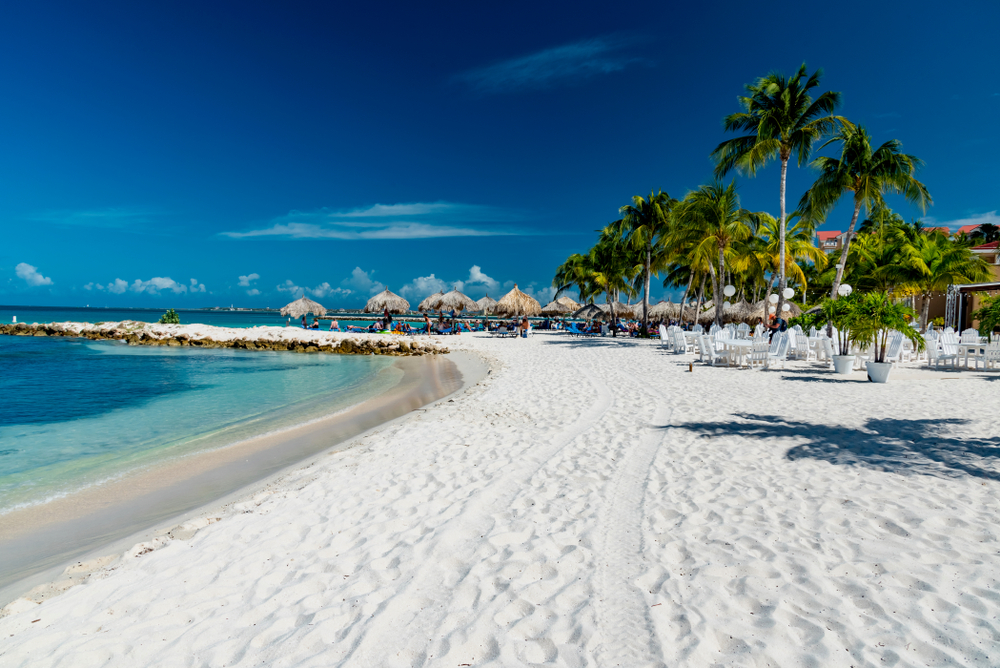
Aruba is not called One Happy Island in vain: the sun will shine almost the whole year, the trade winds will make it always comfortable, and tropical storms hardly ever hit its islands. And even in heaven, time is of the essence. You will need to schedule to seasonal patterns to enjoy Aruba at its best, either beaching, watersports, or cultural festivals. In the guide, Getechub takes you through the best time to visit Aruba, breaking down each month in terms of weather patterns, crowds, and festivals, and budgets to put together a trip that suits your personality.
The Weather of Aruba and the Seasons of the Year
Aruba is located only a little bit south of the hurricane belt and enjoys a relatively steady tropical climate all year round.
- The standard temperature ranges are 27 °C to 31 Deg C (80-88 Deg F).
- The rainfall is not very high, as it is in most of the Caribbean islands. The rainy season starts in October up to the early months of December; however, even then, the rain is usually short-lived.
- The island has access to consistent trade winds, which have the effect of cooling the heat and humidity and bring about wind and kite surfing conditions.
At this level, one can identify three large seasons within the year of Aruba:
- High Season
- Shoulder Season (Mid April- June, September to early December)
- Low or Rainy Season (July to November, with peaks of around October-November)
Get into each a little deeper and see which window you want to select.
High Season: Mid-December-Mid-April
Why It’s a Top Pick
- Most reliable weather – little precipitation, lots of sunshine.
- Festive power – there are festive events, such as Aruba Carnival (January-February), to attract tourists with parades, music, and culture.
- On the western sides, the waters are calmer (Palm Beach, Eagle Beach) and thus, swimming, snorkeling, and paddleboarding are equally enjoyable.
Trade-offs to Consider
- Increased prices – flights, hotels, and excursions are more expensive during high season.
- Bigger groups, especially during holidays, spring break, and major festivals.
- Book – to have good deals and favorable accommodation choices, book 3-6 months in advance.
Recommendation: In case you want perfect weather and have the budget, seek January to early April. December (in time to avoid the holiday traffic) and late in the month of April would also be a good option, but allow yourself a buffer of crowds at the events.
Shoulder Season: Mid-April- June and September to early December
Mid-April to June
- Weather: Continued mainly sunny and dry; however, trade winds might subside a bit.
- Benefits:
- Reduced prices on accommodations and flights (usually 20-30 percent discounts on high-season rates).
- Reduced number of crowds – increased leisure at beaches and attractions.
- Events and culture – the Soul Beach Music Festival in Aruba usually takes place during the month of May, and the wind conditions are still favorable to wind sports.
September to Early December
- Weather: There is a slightly higher probability of showers (particularly October-November), and it remains mostly dry and warm.
- Benefits:
- Best deals- numerous hotels and tour operators reduce the price during this period.
- Serenity – little tourist activity in the attractions of the island.
- Cultural attractions – the Eat Local Restaurant Month in October will provide an opportunity to sample the Aruban cuisine during specials.
Things to Watch
- There might be short-lived disruptions due to some rain showers, especially during October-November.
- The wind is also subject to change, which influences the surf and certain water sports.
- Some of the businesses or tours can cut down operations or shut down during deep off-peak months.
Suggestion: The most desirable balance between the weather, price, and crowd control would be the shoulder seasons. In the case of a lot of travelers, May and late October are some of the best windows when it comes to value and experience.
Low / Rainy Season: July – November
While Aruba does not actually reach a full monsoon climate, this season is regarded as its off-peak or rainy season.
Advantages of Low-Season Travel
- Best price – hotel offers, flight offers, and off-season offers are numerous.
- Isolated beaches and attractions – one can have a deserted stretch of the renowned beaches.
- Water sports – the trade winds are often powerful and this makes it the perfect location to kite/ windsurf, particularly during July and August.
Challenges & Trade-offs
- More humidity – during September and October.
- Short showers – brief rainfalls can be observed, but hardly ever last long.
- The risk of a Hurricane is minimal to Aruba in comparison to most of the Caribbean islands, although of indirect impact (cloud cover, wind variations).
Precaution: The Low season is the most appropriate when the main concern of the traveler is the budget and privacy rather than the ideal weather. The months of July and August are more reliable; the months of October to November are more likely to have rain, but also get amazing deals.
How to pick the most appropriate time
The following are some of the important tips depending on your interests:
- To enjoy the weather and to experience it to the fullest – Set the goalforo January-March.
- Good trade-off (cheaper, but it is still nice) – Target April-June or October
- To spend the least, and travel without noise – Travel in July, August, or late September-November.
- In case of festivals and events – Dance with Carnival (Jan-Feb), Soul Beach (May), or local holidays.
- In case of wind/board sports, June-August are usually the months when powerful winds are observed along beaches such as fishermen’s huts.
- To snorkel and to have a calmer day at the sea – Dec-Apr is the driest season, and the western shore is the favorite one.
How to plan your trip to Aruba
- Reserve in advance in case of high season traveling– make reservations for places to stay and sightseeing.
- Become more flexible when it rains or in case of shoulder to suit short showers.
- Search package offers during off-peak months – most resorts offer packages to win the attention of travelers.
- Hire a car or arrange island mobility, particularly during low seasons when transportation might be reduced.
- Keep track of local events – keep in line with the music festivals, carnivals, or cultural celebrations to enhance your experience.
Final Thoughts
People really cannot have a bad time in Aruba; it is one of the few places in the Caribbean that is known to have consistent weather all year round. Still, it is better to select your window and make a wise decision so that you will not struggle with overcrowded beaches and have a good time, high costs and bargains, stormy doldrums, and endless sunshine. At getechub, we think that when is the best time to visit Aruba is based on your priorities:
- January-March is the time to go in case you want the best weather and celebrations.
- Select April-June (or October) to have a sweet combination of value, comfort, and experience.
- Choose July through November in case you want to be alone, save as much as possible, and have no problem with a rainy day here and there.
Whatever the time of the day or night, it’s time to go to Aruba and enjoy the warm sea, their warm culture, sunny skies, and relaxed atmosphere. Get your bags packed, get yourself planning a little, nd get yourself set up for one of the most delightful tropical holidays you will ever have.